The European Train Is Not Slowing Down


Prices are rising in the Eurozone, which create a false sense of euphoria at the European Central Bank (ECB). Nevertheless, a recent rise in energy prices explains almost entirely the increase in inflation. If we look at core inflation, we are still far removed from the ECB’s inflation target. Only recently, over the past few months, did core inflation increase.
The ECB also failed to stimulate credit growth, which is stagnant ever since 2014. Fortunately, the fact that prices do not rise and credit does not flow is having no negative consequences for the Eurozone economy. Despite the failure of the ECB to reach its objectives, the Eurozone economy is growing at a solid yet, above all, sustainable pace in the long term.
The only severe danger in the short run is the implementation of a negative interest rate policy, which is burdening the European financial system with a type of additional tax that prevents banks from finishing their restructuring efforts.
Doubts about Chinese Growth


In the third quarter, the Chinese economy continued to slow down and the negative outlook has not been revised since the beginning of August 2015. Although consumption per capita continues to grow, the enormous inequality across the country, a still developing internal market and a large dependency on the export sector, leads us to expect a negative scenario for the coming months, even beyond the previously discussed hard landing.
Read MoreFast Decisions Raise Alarms in the Guatemalan Economy


Despite of what was expected at the beginning of the year, GDP growth for the second quarter of 2016 shows a recovery of 3.4%. Due to the growth in August and September, the next report should show a GDP growth of approximately 2.4% for the third quarter of the year.
Inflation remains high—4.56%—despite of the growing activity in open market operations; however, it still remains within the inflation target set by Banguat. Credit to consumer and capital goods has slowed its growth rate since the end of 2015, reaching rates close to zero.
Read MoreBetween the Fed´s Monetary Policy and Trump´s New Government

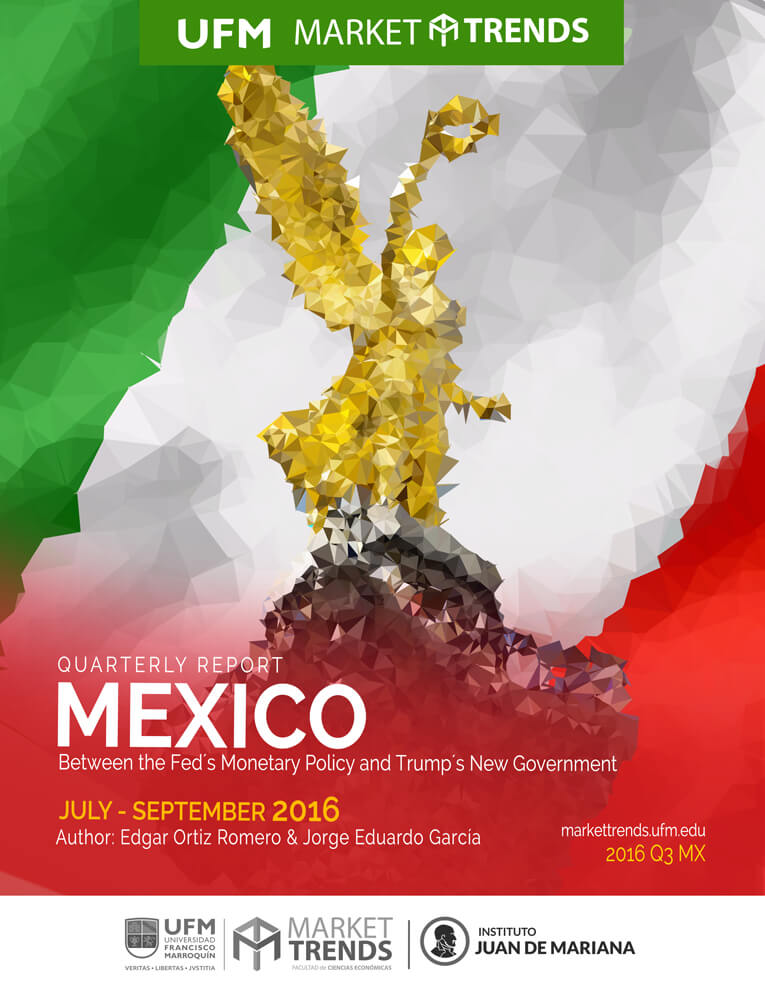
Mexico remains in the midst of an exchange rate depreciation that does not seem to end. The Bank of Mexico must face the speculation about the peso caused by Trump’s victory and its international context, and the rise of interest rates by Federal Reserve in December.
For now inflation is controlled, but production prices have increased and seem to anticipate inflation in the near future. Furthermore, the government announced a budget that promises to reverse the growth of public debt, which has increased since 2013.
ECB to Extend QE Increasing the Risk of Bank Insolvency

The European Central Bank is expanding the quantitative easing even though the program, along with negative interest rates, has only manage to damage the banking sector. The credit extended by the banking sector and the underlying prices—the ECB’s performing targets—are at pre-QE levels.
The Eurozone is growing despite of the ECB. Growth is solid, although it is different between countries. Value creation and employment have been slightly affected by international political and economic turmoil. The extent of the damage caused by the ECB’s non-conventional monetary policy is still to be determined.
Read MoreAt the Dawn of Promising Economic Growth


US GDP growth in the third quarter of 2016 was 1.6%. This is positive news, after the GDP growth rate was trending down ever since September 2015. Quarterly GDP growth, not seasonally adjusted, came in at 3.1%.
All of UFM Market Trends’ economic indicators demonstrate that the US is finally at the dawn of promising economic growth after the crisis of 2008. However, now that the economy finally appears to be improving, it will be faced with the economic policies of Trump, which might change the panorama soon.
Read MoreThe Reversal in Credit That Officially Ended the Great Recession

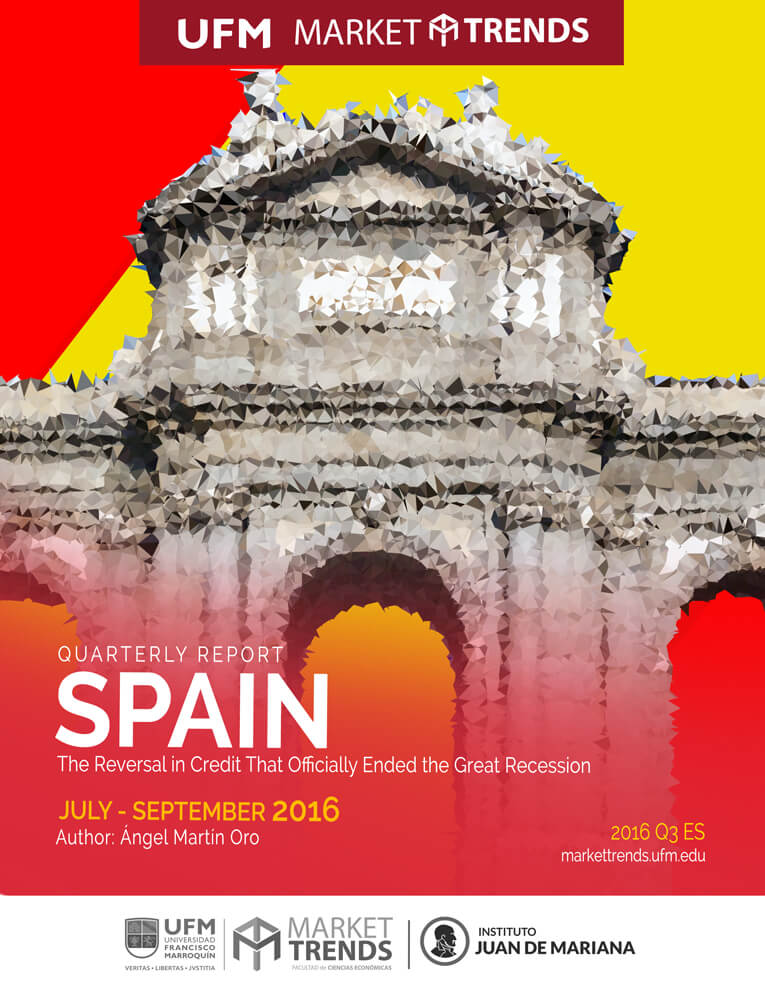
The recovery of the Spanish economy has hardly suffered from the absence of an effective government. With the formation of the new minority Spanish government, a new scenario with greater certainty is on the table. This new scenario could accelerate economic growth in Spain, as long as no harmful economic policies are introduced.
Read MoreThe Last Temptation of the Fed

In the second quarter of 2016, the Unites States grew 1.1% (year-on-quarter growth). Although growth rates have remained positive since Q2 2015, the rates are declining. The unemployment rate in Q2 2016 has not changed and remains at 4.9%.
Read MoreChanging the Chinese Economic Model


GDP growth in the second quarter of 2016 was 6.7% (monthly annual growth). Despite a decline in recent years, it remains stable. Although properties have lost value in recent years, spending has been on the rise and has compensated for the loss of value.
Read MoreCaught Between the Depreciation of the Peso and the Paralysis of the Industrial Sector

Mexico’s annual economic growth rate was of 1.5% in the second quarter. The economy is still expected to grow at 2.6% by the end of the year. The industrial sector remains stagnant and grew by only 0.25% in this quarter.
Read More